At Anna Korneeva Law we handle various
immigration cases
- Marriage to a U.S. Citizen
- Sponsorship of family members
- Fiancées
- Becoming a naturalized U.S. citizen
- Violence Against Women’s Act
- Consular processing
- Widows
we will do it together
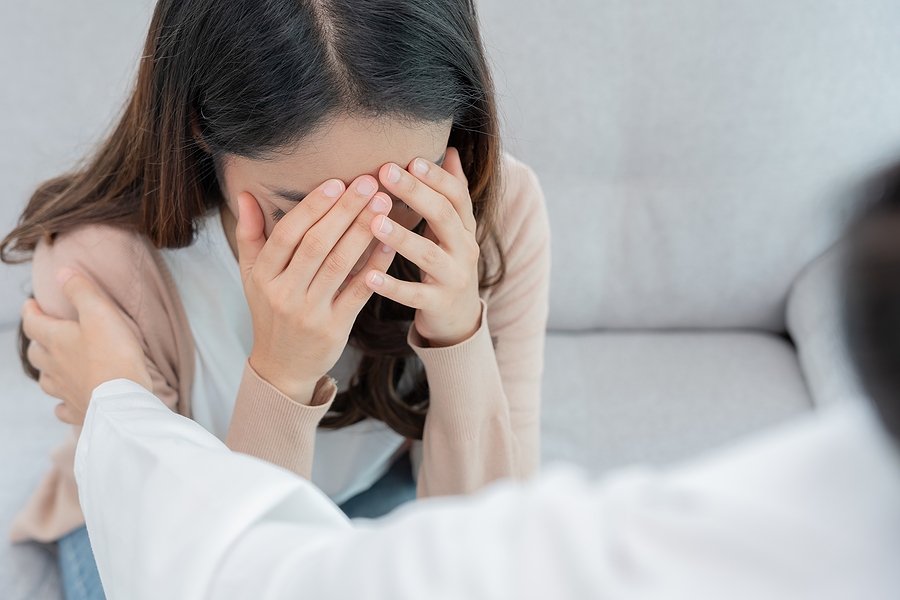
An immigrant facing abuse may not know where to turn. They may be embarrassed or afraid to call the police. Their abuser may be preventing them from seeking help or getting their own immigration status.
The Violence Against Women Act (VAWA) is another path for seeking immigration benefits in the US. Although the title names women, men can also qualify under VAWA. For immigrants in this situation, VAWA can help protect your rights and your immigration status while helping you seek VAWA immigration relief through lawful immigration services.
Originally enacted in 1994, VAWA is a landmark federal law that established groundbreaking protections for women in the United States. It provides and supports comprehensive, cost-effective responses to domestic violence, sexual assault, dating violence, and stalking. VAWA is frequently updated with reauthorizations.
Spouses, children, and parents of U. S. citizens and Lawful Permanent Residents (LPRs) can seek assistance under VAWA. Both men and women can petition under VAWA for their own green card. Survivors can seek safety and legal independence from an abuser without their knowledge or the need for their signature. Survivors are also protected from eviction or denial of housing for being a victim of abuse, and the right to seek emergency transfers to safer housing units.
If you are in this situation, The Law Firm of Anna Korneeva can help you obtain assistance with VAWA and pursue your own lawful immigration journey.
Women and men who are or were a battered spouse can qualify to petition if they are the current or former spouse married to a lawful permanent resident or a permanent resident spouse.
The core eligibility requirements to file a VAWA self-petition include:
“Good faith” and “good moral character” are essential legal standards that are considered in VAWA and other immigration petitions.
It’s important to understand that this type of relief is different from a VAWA self-petition. Someone who already holds a conditional permanent residence (a two-year green card issued when a marriage to a U.S. citizen or lawful permanent resident is less than two years old) is normally required to file Form I-751 jointly with their spouse to remove those conditions and obtain a ten-year green card.
For survivors of abuse, this requirement can become another point of control, since an abusive spouse may refuse to sign or use that refusal as leverage. VAWA addresses this by allowing the conditional resident to file Form I-751 alone, through a waiver of the joint filing requirement, based on the abuse they experienced.
A battered spouse has experienced physical, emotional, or sexual abuse from an intimate partner, including ongoing physical, emotional, sexual, or financial abuse. Battered spouses often face significant health risks such as sexual coercion, sexual dysfunction, and, in females, unwanted pregnancies.
Under VAWA, these individuals can petition for their own green card on their own, without the knowledge or consent of the abusive relative.
Also required is proof that:
If your children received their conditional permanent residence at the same time as you, or within 90 days, you can include them as “derivatives” on your waiver application. If not, they can file their own waivers as a battered child.
If your waiver application is not approved and your conditional permanent residence expires, you and your children will lose your residence and be subject to removal proceedings. You can still file your waiver application even after your conditional permanent residence has expired.
These are two important points that are essential to an application based on VAWA:
Many immigrants arrive in the United States as victims of human trafficking, and frequently move into prostitution, which is a crime. Under certain circumstances, this can lead to disproving someone’s “good moral character,” especially if there is an arrest. This also causes obstacles for becoming a lawful permanent resident.
For someone unwillingly involved in prostitution, the law understands that many are victims of coercion or human trafficking. For abuse cases under VAWA, an applicant may be able to file for a waiver if their circumstances are directly connected to the abuse or extreme cruelty they suffered. Because this is a sensitive case, an applicant needs considerable documentation to prove that involvement was not voluntary. Working with an immigration lawyer who understands VAWA as well as criminal law can help locate law enforcement records, evidence of rehabilitation, and proof that a person was a vulnerable victim and not willingly and actively involved.
The Violence Against Women Act (VAWA) also allows for spouses and children to file their own green card applications without the permission or signature of their abuser. Children and unmarried children can file for a child waiver with their parent or separately to obtain legal protection and permanent residency in the United States.
An abused spouse of a U.S. citizen or lawful permanent resident can self-petition without their abuser. They can include children and stepchildren on their self-petition as “derivative beneficiaries.” Alternately, they can also self-petition, as long as they meet the requirements for age and marital status.
Children are essential to the discussion on a VAWA application, and the law aims to protect families.
A spouse can include their children and stepchildren on their application. They do not have to be abused themselves to be included. Unmarried children must be under the age of 21 at the time of the VAWA petition filing. If a child turns 21 while the parent’s application is still pending, the Child Status Protection Act (CSPA) helps them retain their derivative status.
An unmarried child under 21 who has suffered abuse from a U. S. citizen or lawful permanent resident can also self-petition. In some circumstances, an unmarried child can also self-petition between the ages of 21 and 25 under a “late filing” waiver, if they can show that their application was delayed as a result of the abuse. This requires proof that the abuse was “at least one central reason” for the delay in filing before the 21st birthday.
Once a VAWA petition is approved and the dependent reaches the adjustment stage, they will likely be eligible for employment authorization documents and advance parole. This means that they can also work and travel legally in the United States while they await their green card.
Applicants must demonstrate that they have suffered harm by their abusers. However, the law includes more than just physical injuries. To build a strong case under VAWA, multiple types of proof can be used to create a complete picture of the abusive relationship. VAWA recognizes that an abuser will use different types of control. A successful VAWA application relies on various forms of proof for its description of the relationship between the applicant and their abuser.
VAWA recognizes more than just physical abuse as the basis for an application. Domestic violence includes a wide range of coercive control measures, including:
USCIS uses the “any credible evidence” standard, and a variety of evidence can serve as proof, including protection orders. Arrest records and reports from law enforcement are some of the strongest evidence, but many abuse victims are afraid to contact the police for assistance. Medical evidence, such as doctor and hospital records, emergency room and urgent care visits, and photos of injuries, is also evidence of an abusive relationship.
Without input from law enforcement, secondary evidence can also be used to detail abuse, such as:
While one form of evidence is helpful, the more evidence an applicant can offer will strengthen their application and demonstrate patterns of conduct that comprise abusive treatment.
Immigrants caught in an abusive relationship may feel they have no options solely because they are immigrants.
VAWA abuse involves a pattern of “battery or extreme cruelty” inflicted by a U.S. citizen or lawful permanent resident spouse, parent, or adult child. This can be physical violence, emotional distress, and immigration-related coercion, among others, that can come under the heading of domestic violence:
A police report is NOT a requirement for VAWA. The abusive behavior can be documented in different ways, such as a victim statement or medical records.
Emotional abuse happens behind closed doors without physical injuries. Therefore, VAWA permits a wide variety of documentation to prove your claim rather than requiring official legal or medical reports.
A personal declaration is the core and the foundation for your evidence and proof of abuse. In it, you’ll detail the history of the relationship between you and your abuser. Include specific incidents of abuse with dates, how the abuser isolated or controlled you, and how your mental and daily well-being were impacted. This description sets the context for the rest of the supporting documents.
While law enforcement is one of the many potential sources of support for your claim, evidence can come from multiple sources that involve the abuser and the impact of the abuse. Any credible evidence that highlights the abuse, the relationship between the applicant and the abuser, and the impact on the abused spouse and any children can be used for a VAWA application.
An eligible VAWA self-petitioner does not need the abusive family member’s sponsorship or signature to obtain their own immigration protection. The petitioner submits their VAWA petition to USCIS along with supporting evidence demonstrating eligibility under the VAWA framework.
Self-petitioning involves preparing and filling out the required forms, gathering evidence and documentation, and submitting the VAWA application for review. Once a person files their VAWA application, immigration authorities evaluate the case to determine whether the applicant qualifies as a self-petitioner and meets the legal requirements for approval. Applicants may receive additional requests for evidence during the process before they receive the final decision.
The U.S. Citizenship and Immigration Services, or USCIS, is the federal agency under the Department of Homeland Security that handles immigration filings, including VAWA self-petitions. It’s the agency that receives Form I-360, reviews the evidence submitted, and ultimately decides whether to approve or deny a case.
USCIS manages the process by which those who want to become U.S. citizens through naturalization. It is the agency where immigrants will submit their applications. The agency determines each individual’s eligibility, processes their application, and, after approval, schedules them for their Oath of Allegiance ceremony. The agency also determines eligibility for citizenship for those who received U.S. citizenship through their parents, as well as relatives of U.S. citizens and permanent residents who want to immigrate into the country.
If the VAWA self-petition is approved and other requirements are met, an applicant can apply to adjust status to transition to a lawful permanent resident and be issued a green card. A work authorization can also become available during the process.
An adjustment of status is a process in which an applicant transitions to lawful status. This includes work authorization, a green card, or a VAWA green card for permanent residence. A work authorization allows someone to legally work in the US for a specific amount of time. The eventual transition from either type of green card is becoming a lawful permanent resident on the way to becoming a US. Citizen.
With a standard green card, an applicant must have the backing of a relative who is a U.S. Citizen or green card holder. A VAWA green card is one where someone self-petitions and does not need the abusive relative to reach green card status.
Long-term immigration relief can include obtaining lawful permanent resident status. A “green card” is issued when an immigrant’s application is approved and they become a permanent resident. The green card identifies a person as someone who is legally in the U.S. but is not a U.S. citizen.
Following application approval, you may be able to obtain a work authorization, called an “Employment Authorization Document” or “EAD,” which allows you to legally work in the U.S.
For someone already facing immigration court issues, VAWA addresses defensive relief. VAWA cancellation of removal is similar to, but distinct from, the affirmative VAWA. The biggest difference is that the person must already be in removal proceedings in immigration court to apply. Applicants use Form EOIR-42B to apply. The case is decided by a judge, not by USCIS, and is different from an affirmative VAWA case.
To qualify, an applicant must have three years of continuous physical presence in the U.S., less than the usual 10 years required for the standard cancellation of removal. It also requires good moral character and nothing in the applicant’s record that might disqualify them.
There is no deadline associated with the loss of the abuser’s status or a divorce. Abused sons and daughters can also qualify for VAWA cancellation without age or limits on their marital status. But if the VAWA cancellation is granted, the removal proceedings end and the individual will then receive a lawful permanent residence in the US.
A U Visa, designed for victims of a crime who cooperate with law enforcement, is also a possibility for relief under VAWA. VAWA case timelines vary based on the case’s complexity, the evidence submitted, and USCIS’s current workload.
One concern for immigrants is the loss of their ability to live in the U.S. while they seek a green card. Should their visa run out or they experience other problems, they may face removal and deportation. Someone who is living with or related to an abuser may find themselves threatened with deportation. They need help before they run out of time and face removal from the U.S.
A VAWA cancellation of removal can offer relief for noncitizen survivors of abuse who are in removal proceedings and facing deportation. If their VAWA petition is granted, it cancels the deportation process, and the applicant receives an adjustment of status to Lawful Permanent Resident (LPR).
A petitioner must act quickly to self-petition to avoid removal and deportation. Submit Application Form EOIR-42B directly to the judge, along with other evidence that qualifies an applicant for a VAWA Cancellation of Removal. This evidence includes documentation of the relationship, physical presence, abuse, good moral character, and extreme hardship.
After filing a VAWA self-petition, the next question is likely how long it will take before everything is completed. Much will depend on the VAWA case itself and the USCIS review process. Case timelines vary based on the facts, evidence, case complexity, and the USCIS’s case workload.
The basic process includes:
The average time to process a VAWA self-petition (Form I-360) is roughly three to four years. The addition of the Adjustment of Status (Form I-485) for a Green Card can be a total of four to six years, or longer. Timing is based on the VAWA case and the USCIS review process. Case timelines will vary based on the facts, accompanying evidence, and the agency’s processing. Any issues can lead to longer completion times.
VAWA cases involve real safety concerns, and proving eligibility takes careful preparation. Whether that’s documenting abuse, establishing good moral character, or meeting the continuous presence requirement for cancellation cases, working with a Cincinnati VAWA Lawyer can ensure that everything is done correctly to avoid delays.
Because self-petitioning and cancellation of removal are different processes with different rules, having the right legal guidance can make a meaningful difference in how a case is filed and how a person’s safety is protected along the way. A VAWA immigration lawyer can help protect your rights, prepare necessary filings, and coordinate immigration services.
The Law Firm of Anna Korneeva can help with VAWA applications and more. Contact our office today at 513-647-5056, by email at anna@annakorneevalaw.com, or use our online contact form.
Contact Us
Hablamos Español
Мы говорим по-русски