The new public charge rule 2026 will significantly change how the Department of Homeland Security (DHS) evaluates certain immigrants applying for admission to the United States or adjustment of status. The final rule is scheduled to take effect on September 18, 2026, making the filing date especially important for some green card applicants.
DHS is rescinding the public charge regulations adopted in 2022. Under the new framework, immigration officers will have broader discretion to consider an applicant’s circumstances when deciding whether the person is likely to become a “public charge.”
What Is the Public Charge Rule?
The public charge ground of inadmissibility allows the federal government to determine whether certain applicants are likely to become dependent on government assistance in the future.
Under the 2022 regulations, the public benefits considered in this analysis were relatively limited, primarily focusing on public cash assistance for income maintenance and long-term institutionalization at government expense.
Beginning September 18, 2026, the analysis may include a much broader range of means-tested public benefits. DHS has explained that officers may consider an applicant’s application for, approval or certification to receive, or receipt of such benefits as part of the totality of the circumstances.
These benefits may include programs such as Medicaid, Supplemental Nutrition Assistance Program (SNAP), Children’s Health Insurance Program (CHIP), and certain means-tested housing assistance programs. However, receiving a benefit does not automatically make an applicant inadmissible. Public charge determinations remain individualized and must consider the applicant’s overall circumstances.
Why September 18, 2026 Matters
For adjustment of status applicants, timing may determine which public charge standard applies.
Applications properly filed before the new rule’s effective date and accepted by USCIS are generally adjudicated under the 2022 public charge framework. Applications postmarked or electronically submitted on or after the effective date will be evaluated under the new framework.
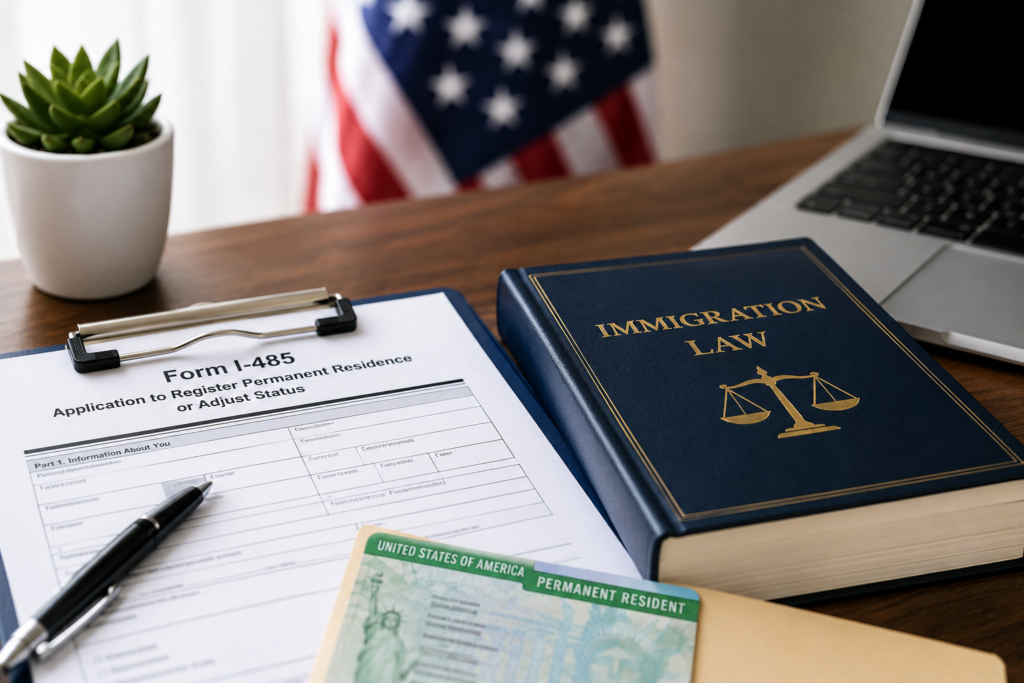
Applicants who are currently eligible to file Form I-485 should therefore discuss timing with an immigration attorney. Filing quickly should never mean submitting an incomplete or inaccurate application. A rejected filing that must be submitted again after the effective date could have different consequences.
What About Benefits Received Before the New Rule?
The new framework is prospective in important respects. Previously excluded means-tested benefits received before the effective date generally will not suddenly be treated under the expanded standard. For benefits received before the effective date, DHS has stated that the 2022 approach will continue to govern their treatment.
After the effective date, however, an applicant’s own application for, approval for, or receipt of means-tested benefits may become relevant to the public charge analysis.
Importantly, benefits received by family or household members are generally not attributed to the green card applicant as though the applicant personally received them. DHS states that USCIS generally focuses on benefits involving the applicant, although household financial circumstances can still be relevant to the broader financial analysis.
Applicants should not automatically cancel Medicaid, nutrition assistance, health coverage, or other benefits without first obtaining individualized legal advice.
Public Charge Is a Totality-of-the-Circumstances Test
Use of a means-tested benefit does not automatically result in denial of a green card application. Officers must evaluate the complete circumstances of each applicant.
Relevant considerations may include age, health, family status, income, assets and financial resources, education, employment history, skills, and other evidence bearing on the likelihood of becoming a public charge. DHS specifically states that receipt of Medicaid or another means-tested benefit is one consideration rather than an automatic determination.
Certain immigration categories also remain exempt from the public charge ground of inadmissibility. Because exemptions and individual circumstances vary, applicants should determine whether the rule applies to their specific immigration category before making decisions based on benefit use.
Need Help Understanding the New Public Charge Rule 2026?
Public charge questions can have serious consequences, especially if you are preparing to apply for a green card, currently receive or recently applied for public benefits, or are uncertain whether the new rule applies to you. Filing dates, benefit history, household circumstances, income, assets, employment, and immigration category can all affect the analysis.
📞 Contact the Law Firm of Anna Korneeva at (513) 647-5056 to review your immigration history, evaluate potential public charge concerns, and take timely steps to protect your path toward lawful permanent residence in the United States.
Disclaimer: This article is for general informational purposes only and does not constitute legal advice. Immigration law is highly fact-specific, and the rules regarding public charge inadmissibility, adjustment of status, and public benefits can be complex. You should consult a qualified immigration attorney before making decisions about your immigration case or changing enrollment in any public benefit program.
Article Based on: American Immigration Lawyers Association. (2026, August 18). USCIS Policy Alert on Public Charge Ground of Inadmissibility. AILA Doc. No. 26081803.